Evidence-grounded discovery
Cited source material keeps Findings, decisions, and proposed structure reviewable.
Requirements intelligence for governed delivery
AIKOZO gives product and engineering teams one governed path from raw source material to clear specifications, reviewable plans, connected delivery work, and feedback from implementation.
Its AI stays grounded in project evidence. People review the findings, scope, estimates, design choices, and downstream changes before they become part of the delivery baseline. Detailed workflows and operating guidance are available in the documentation.
Cited source material keeps Findings, decisions, and proposed structure reviewable.
People review AI-assisted changes before they become shared project knowledge or an accepted baseline.
Intent stays connected through specification, planning, design, implementation, and feedback.
Reviewed synchronization connects governed artifacts with the delivery tools teams already use.
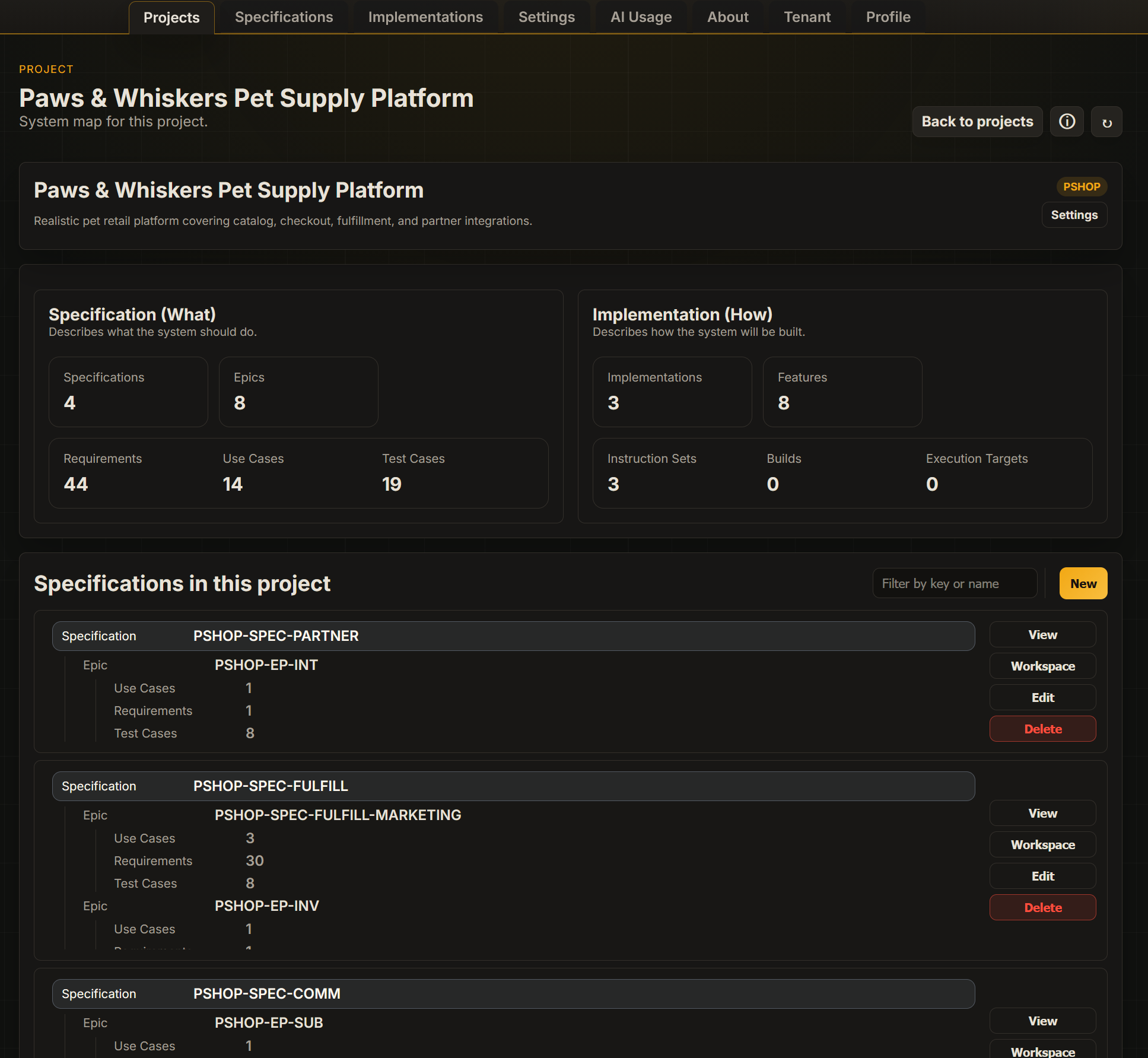
AIKOZO combines kōzō (構造), meaning structure, with ai (合), meaning harmony—and reflects Artificial Intelligence used with intent.
AIKOZO is not AI for spectacle. It is AI for well-structured progress: governed across the SDLC, auditable by design, and grounded in the work your teams already do.
One connected operating model
AIKOZO connects the decisions that are usually scattered across documents, meetings, issue trackers, architecture tools, and delivery systems.
Discover
Turn files, web pages, and notes into cited findings, explicit decisions, and a reviewed project structure instead of another unsearchable document pile.
Specify
Author requirements, use cases, and test cases naturally while preserving identity, coverage, bilingual content, relationships, and review history.
Plan
Assess readiness and effort, compare full and active scope, review Minimum Baseline opportunities, and carry accepted scope into implementation features.
Deliver
Connect designs, flows, delivery packages, execution targets, build runs, and feedback to the approved requirement and planning lineage.
AI Workspace
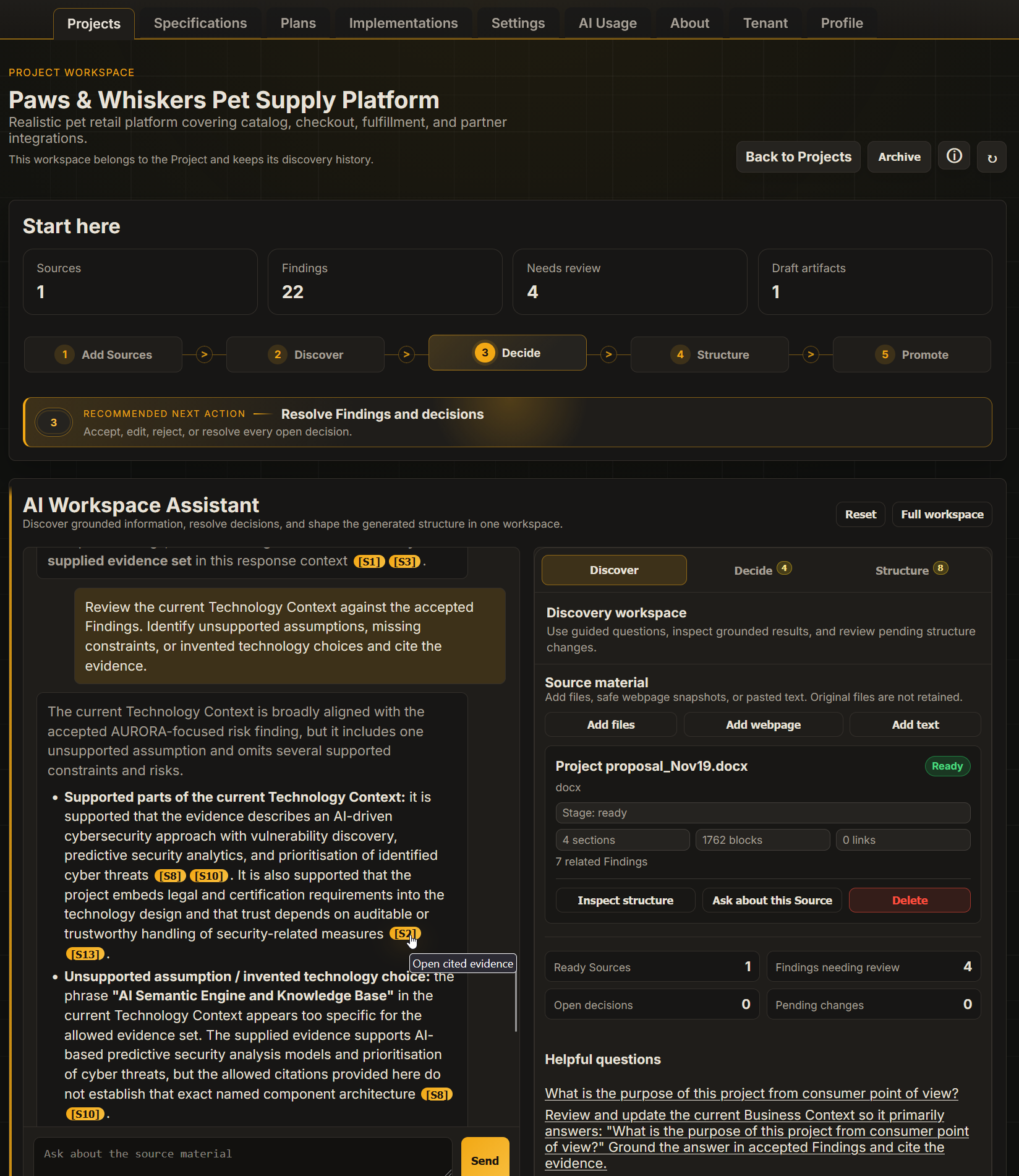
Add PDF, DOCX, HTML, Markdown, text, public web pages, or pasted notes. AIKOZO structures the material, retrieves relevant evidence, and helps the team move through one reviewable path from discovery to a promotable specification draft.
Bring the existing evidence into one bounded workspace.
Ask grounded questions and capture cited goals, constraints, gaps, and open questions.
Accept, clarify, reject, or record decisions without erasing the original evidence.
Review business context, technology context, epics, and requirements before promotion.
AIKOZO SmartDoc
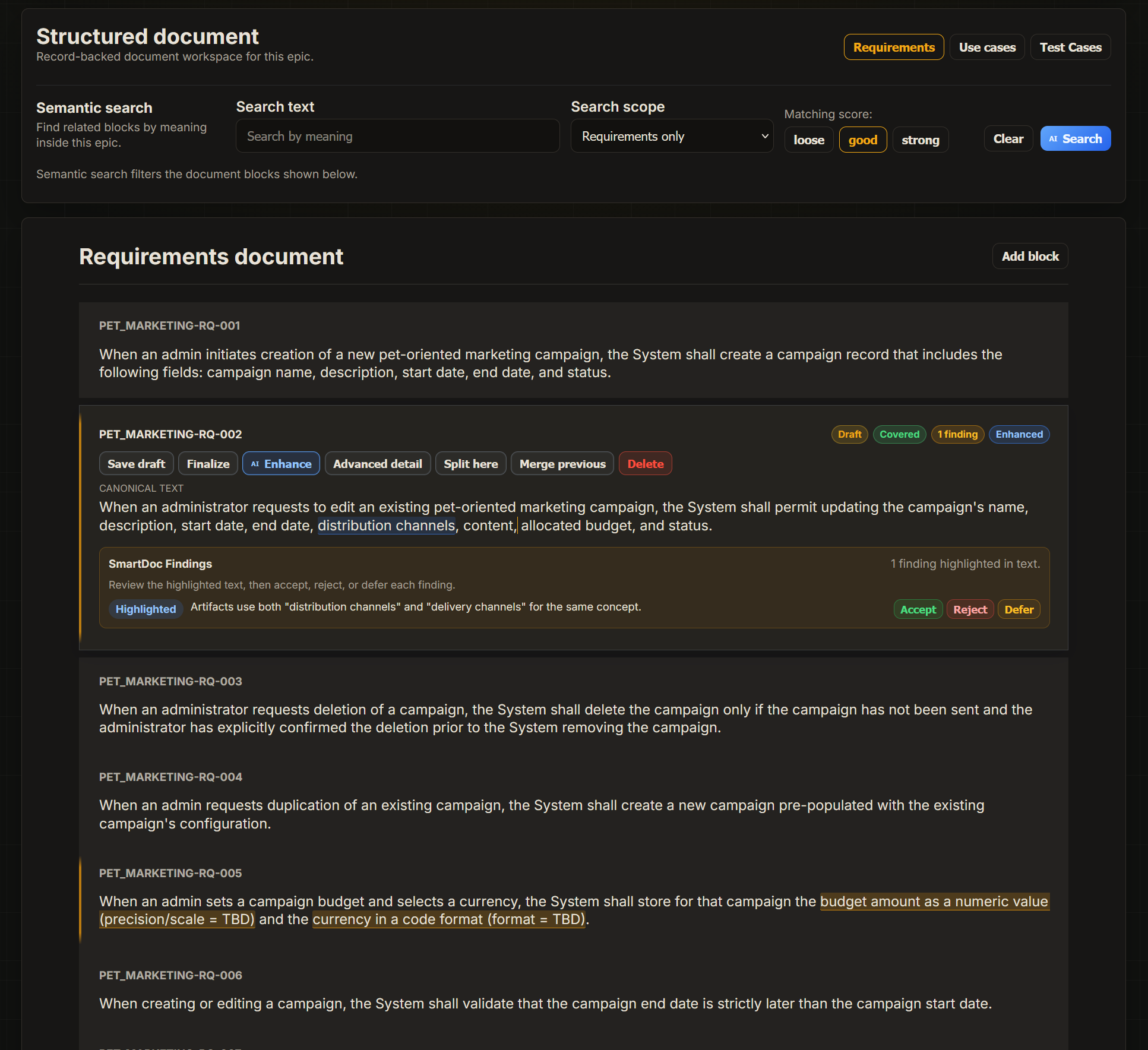
AIKOZO SmartDoc lets users work with requirements, use cases, and test cases in one continuous, document-like editor while preserving each artifact as a structured, traceable record.
Teams can write and review specification content naturally, while AIKOZO keeps artifact identity, hierarchy, relationships, history, and downstream traceability intact.
Bilingual projects can present localized content to users while preserving canonical English for internal reasoning, embeddings, semantic search, and implementation handoff.
Requirements, use cases, and test cases can be reviewed together in a single specification flow instead of being scattered across disconnected screens.
Every edited artifact remains a typed record with identifiers, ownership context, status, and links for search, reporting, and automation.
Approved relationships continue into semantic search, lineage views, impact analysis, and delivery handoff workflows.
Enhancement previews, contextual assistance, and localized final text handling let teams improve artifacts without losing review control.
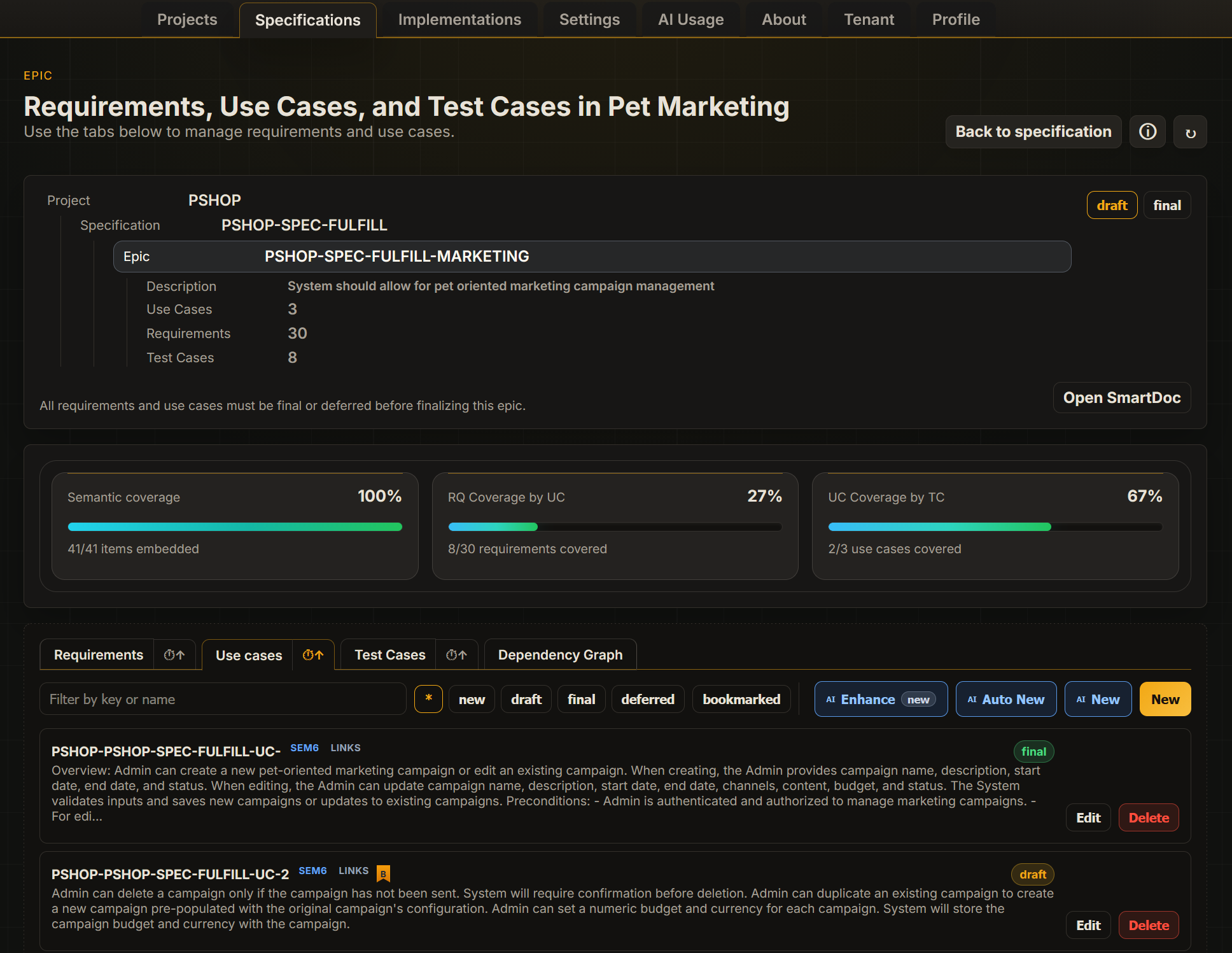
Epic workspace
Epic pages bring requirements, use cases, test cases, coverage, gap analysis, semantic context, link review, timeline history, and traceability together so teams can review scope and quality from one working surface.
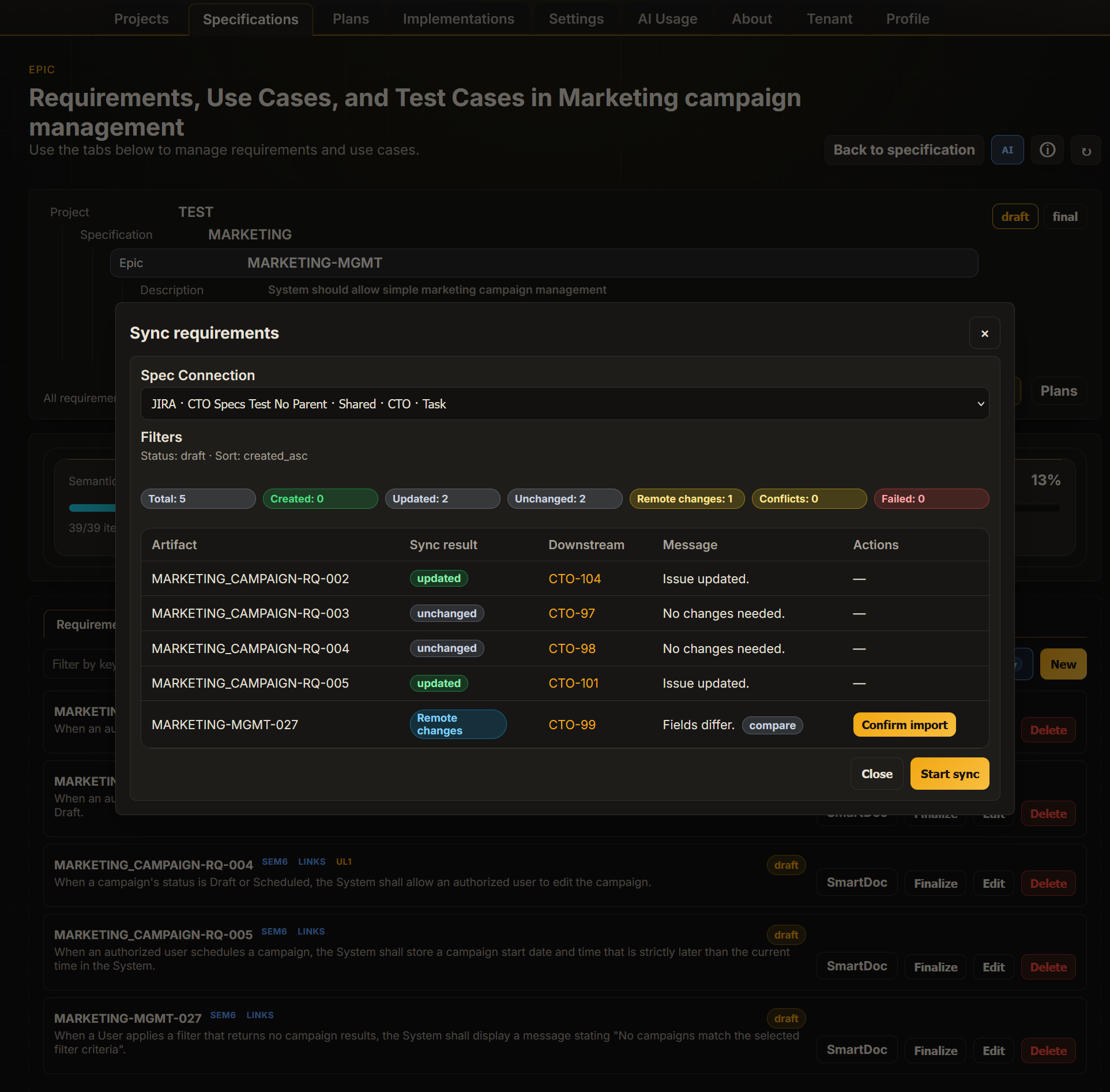
Specification Connections
Connect a specification to Jira, GitHub, or GitLab. Teams can import existing issues into a new Epic or synchronize filtered Requirements and Use Cases to downstream work items.
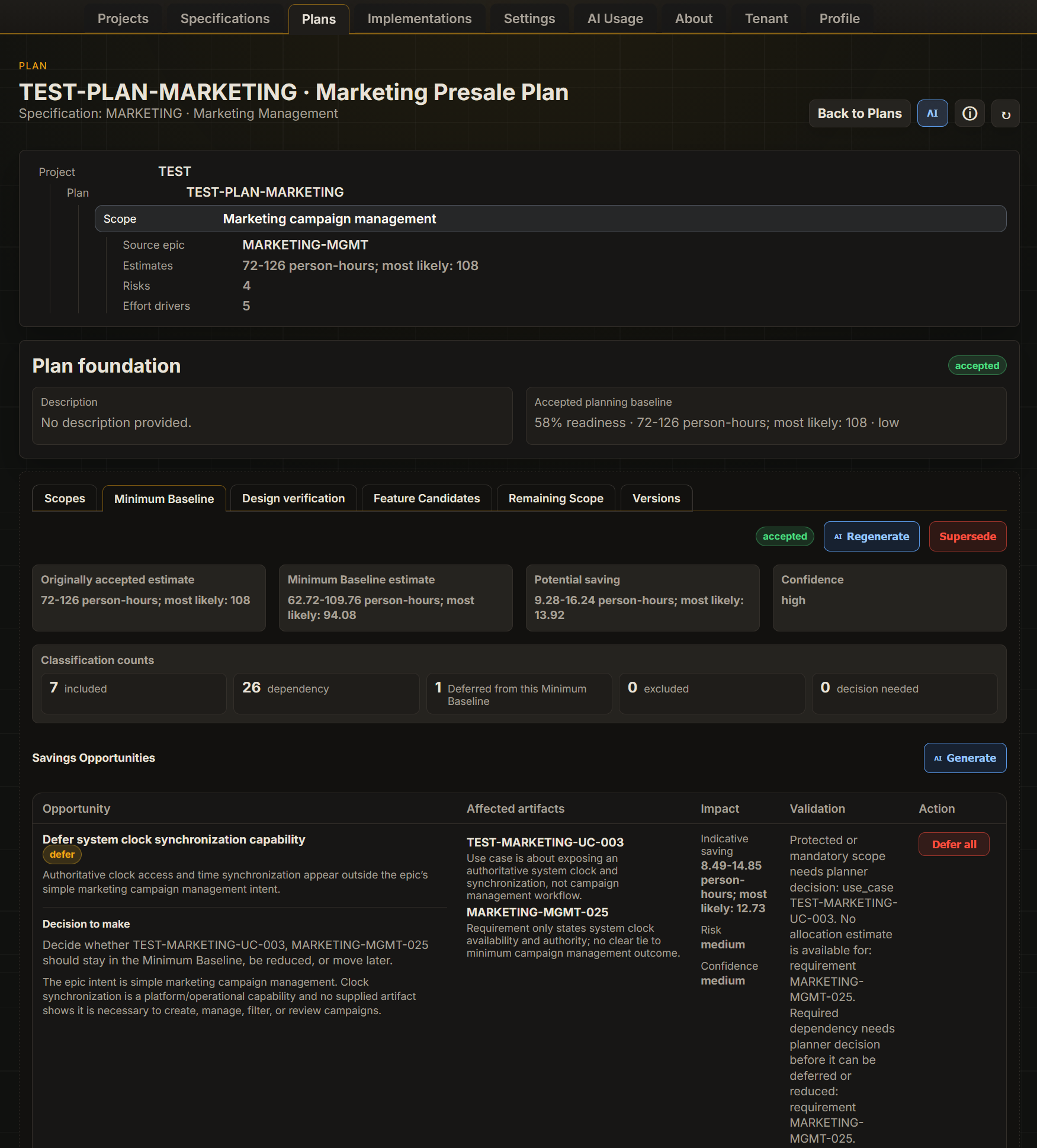
Planning
Planning is guidance, not an automatic commitment. Each Specification-scoped Plan turns Epics into Planning Scopes with evidence, effort ranges, readiness, confidence, risk drivers, and auditable human decisions.
Compare Full and Active Scope, review factor evidence, and defer or restore items without rewriting source specifications.
Trace accepted estimates across delivery roles and specification artifacts, with reconciliation back to the Scope baseline.
Separate required scope, dependencies, deferrals, exclusions, and unresolved decisions; review potential savings without silently cutting scope.
Project an accepted baseline into reviewable implementation boundaries while preserving links to the originating plan and artifacts.
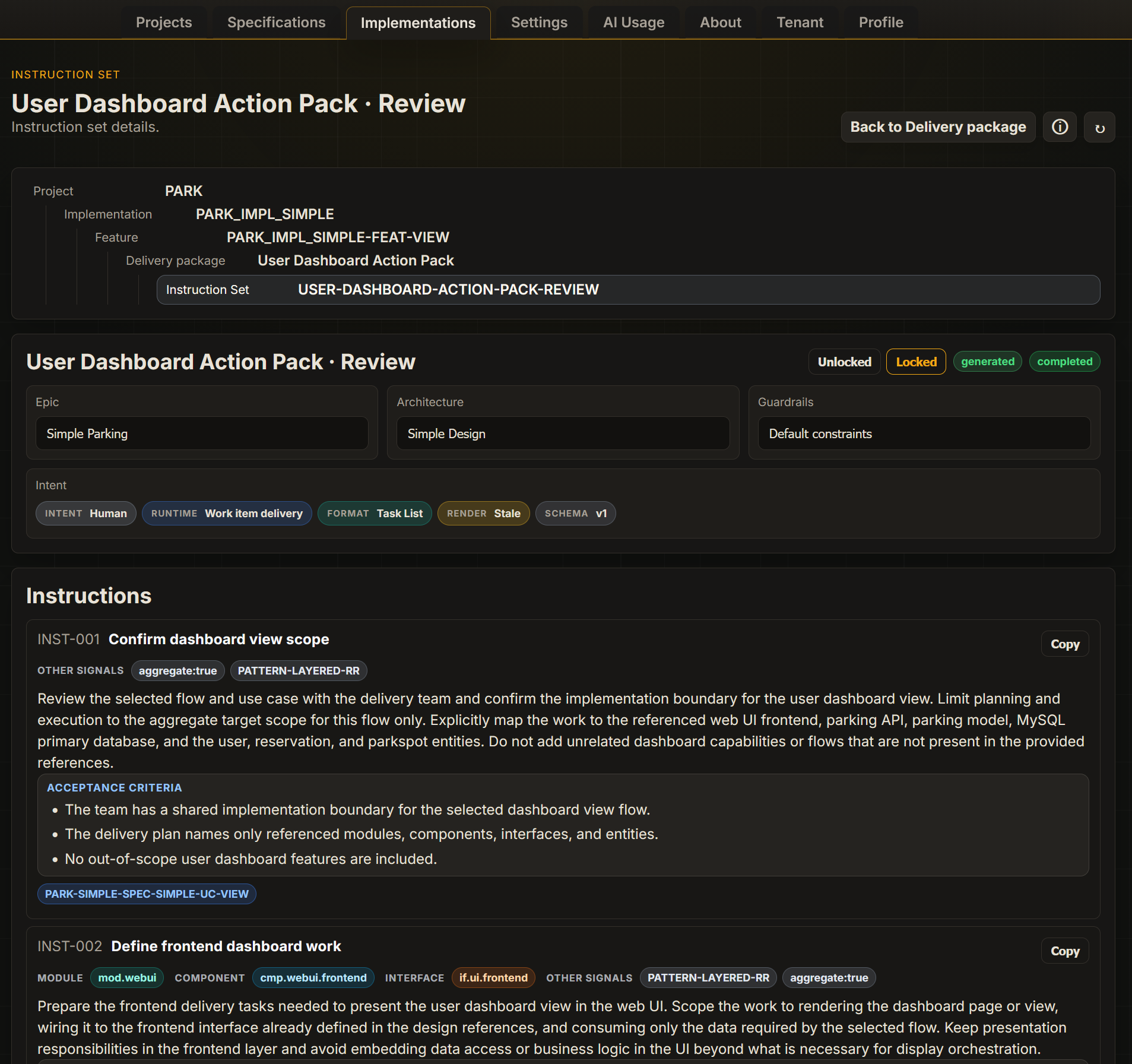
Design to delivery
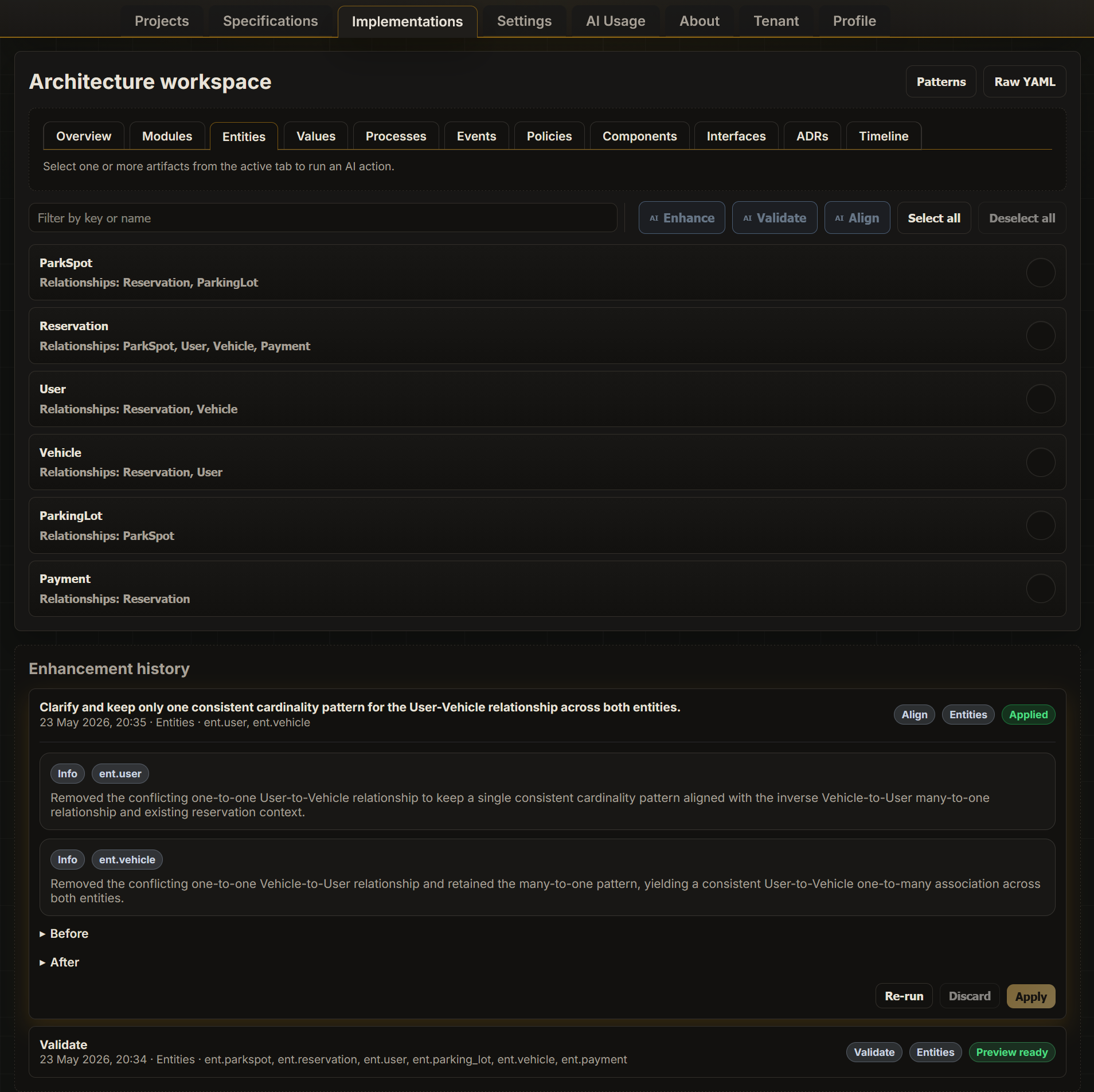
Guided Implementation and Feature workspaces organize the path from architecture to a delivery package while detailed tools remain available for teams that need deeper control.
1. Architecture
Connect design fragments, patterns, constraints, and guardrails to the approved specification and plan.
2. Feature flows
Generate and review Flow Designs that connect feature behavior with aligned modules, components, interfaces, entities, and constraints.
3. Delivery packages
Produce Action Packs and instruction sets, route them through execution targets, and reconcile build and CI feedback without severing the source lineage.
Every stage retains the context needed to explain what is being built, why it belongs, and where feedback must return.
AI & trust
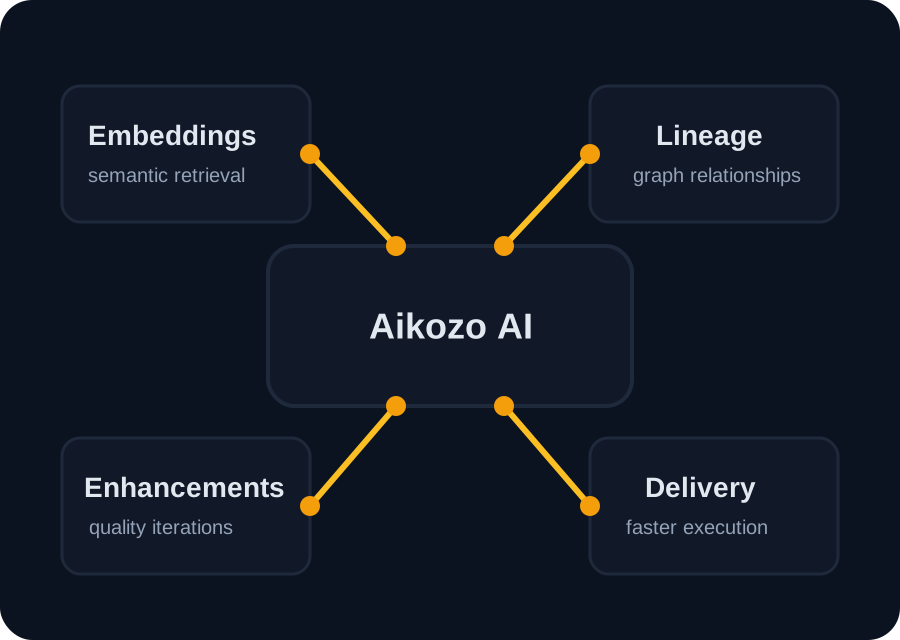
AIKOZO combines semantic retrieval, lineage, structured outputs, and human review so assistance stays connected to project reality.
Contextual AI Assistant
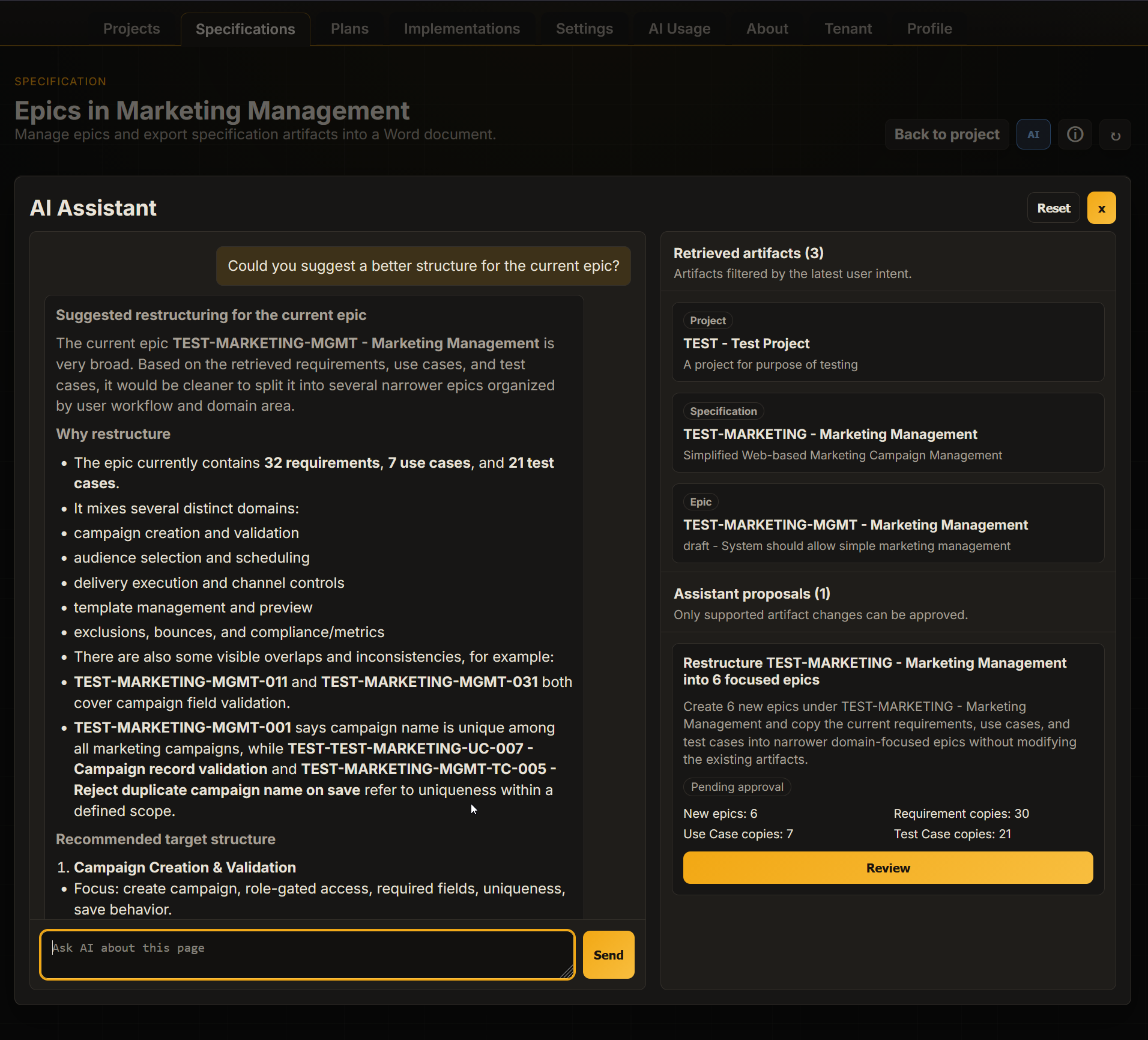
On supported pages, the Assistant works with the current page, selected artifact, and scoped project structure. It can explain relationships, compare related work, infer likely implications, and answer follow-up questions across Projects, Epics, Requirements, planning, Implementations, architecture and design artifacts, and connected delivery context.
This complements the dedicated AI Workspace: AI Workspace guides evidence-led discovery and specification drafting, while the contextual Assistant helps teams reason about and refine the AIKOZO structure already in place. Availability is controlled by the tenant capability configuration.
Built for cross-functional delivery
AIKOZO gives each discipline the context it needs without creating a separate version of the truth.
AIKOZO is a requirements intelligence and governed delivery platform. It connects evidence, decisions, specifications, plans, design, implementation work, and delivery feedback with practical AI assistance.
It turns files, public web pages, and notes into cited Findings, explicit decisions, Business and Technology Context, Epics, and Requirements that people review before promotion to a Specification.
On supported pages, it reasons from the current page, selected artifact, and scoped AIKOZO project structure. It can explain relationships, infer implications, answer follow-up questions, and propose supported changes across projects, specifications, planning, implementations, and related artifacts.
Yes. Specification Connections can import Jira issues or synchronize filtered Requirements and Use Cases. AIKOZO retains downstream mappings and surfaces remote changes and conflicts for review.
No. AIKOZO produces reviewable assessments, evidence, effort ranges, confidence, and savings opportunities. Planners accept, override, defer, restore, or supersede the resulting baselines.
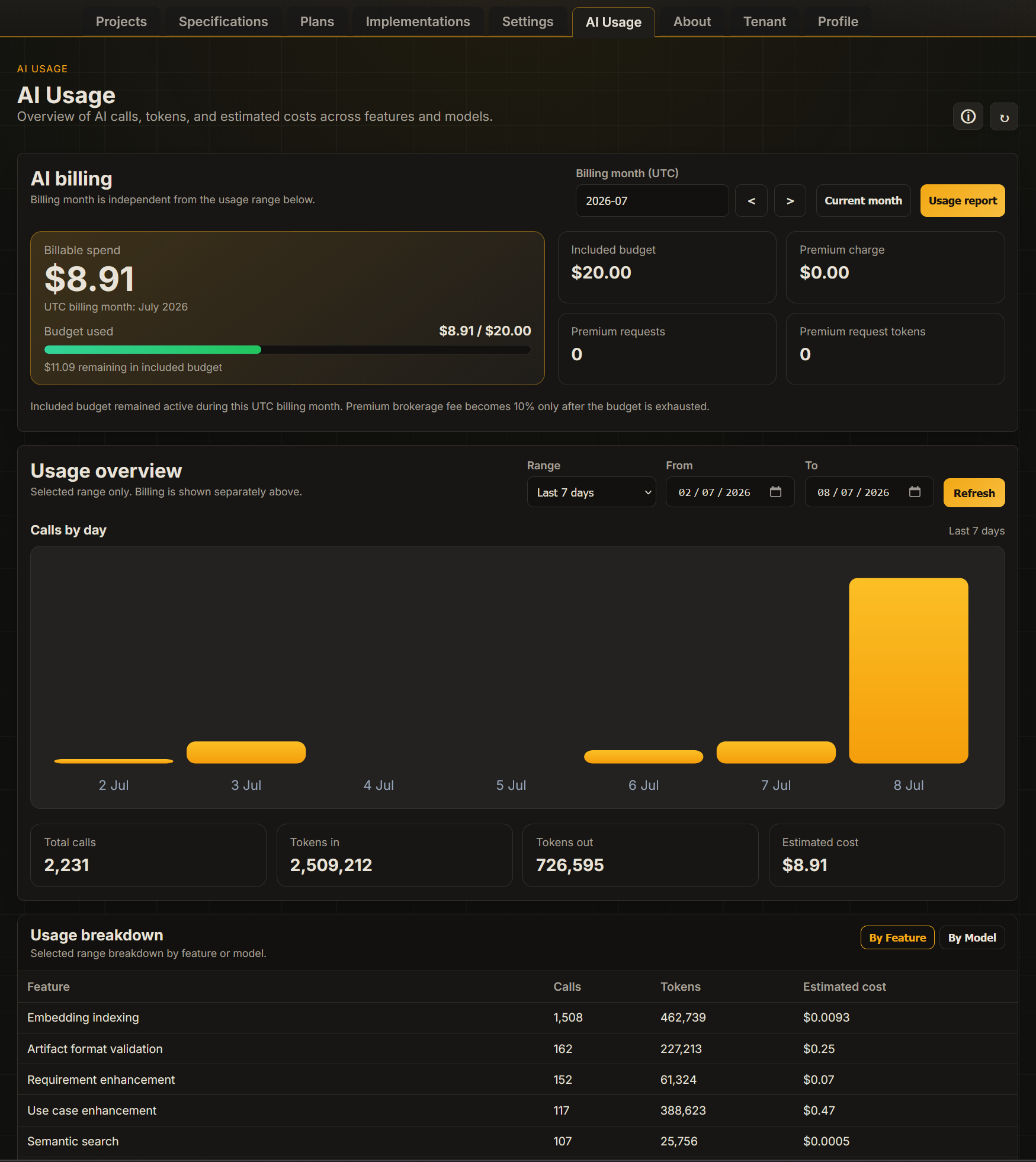
The platform uses scoped project context, semantic retrieval, citations, lineage, typed outputs, and explicit review states. Tenant controls, RBAC, usage events, job visibility, and prompt and model settings provide operational oversight.
Yes. Localized user-facing text is preserved next to canonical English used for internal reasoning, embeddings, semantic search, and implementation handoff.
Yes. It supports Jira, GitHub, and GitLab connections for specification and delivery workflows, plus an authenticated, tenant-aware MCP adapter for approved external AI access.